You have roasted the vegetables, dressed the salad, and brought the bread to the table. Before anyone takes a bite, the room already has an atmosphere. Dinner smells like dinner.
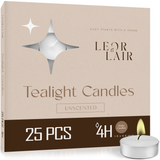
That is a good reason to choose unscented candles for the dining table. Not because scented candles have no place at home, but because a meal is one occasion when another fragrance may be more than you need.
Candlelight can make an ordinary evening feel considered without adding a competing scent. Here is how to decide when less fragrance makes more sense, and how to build a welcoming table around that choice.
Let the meal set the mood
Think about the moments you look forward to when someone cooks: garlic warming in a pan, fresh bread being torn open, citrus zest over a finished dish. Those aromas are part of the experience, not just background details.
A strongly fragranced candle introduces another scent into the room. Whether that combination is enjoyable is personal, but it can pull attention away from what you are serving. A fragrance you love beside the sofa may feel less welcome next to a bowl of soup.
Choosing unscented candles is a simple way to avoid arranging a second scent around the menu. You can plan the food, set the table, and leave the fragrance pairing out of it.
What unscented does, and does not, mean
Look for candles explicitly described as unscented rather than assuming that a pale color, a simple shape, or a particular wax means no fragrance has been added. Check the product description when you shop.
Unscented generally means a candle is not made with an added fragrance intended to perfume the room. It does not promise a completely odorless experience. Wax and wicks may have a faint smell, and lighting or extinguishing a candle can produce a noticeable odor.
It is also not a health certification. Do not treat the word as a guarantee that a candle is suitable for someone with asthma, allergies, or fragrance sensitivities. If a guest has concerns, ask what makes them comfortable and be ready to skip burning candles altogether.
Choose by the occasion, not a rule
Unscented candles are an easy default for a sit-down dinner, a holiday meal, or an evening centered on tasting food or wine. They allow the table to feel special without requiring every guest to share your taste in home fragrance.
They also simplify a mixed menu. If dinner moves from a savory main course to fruit, coffee, or a rich dessert, there is no candle fragrance to reconsider between courses.
That does not make scented candles a bad choice everywhere else. A favorite fragrance might belong to a quiet reading hour or another occasion when food is not the focus. The useful distinction is what you want to notice most in that moment.
Think beyond the candle on the table
A fragrance-free dining setup can still sit inside a heavily scented room. Before guests arrive, consider nearby reed diffusers, room sprays, and scented candles elsewhere in an open-plan space.
If your aim is to let the meal's aromas lead, avoid adding more fragrance just before dinner. Extinguish any nearby scented candles safely and allow time for their fragrance to dissipate. Do not expect swapping the table candles at the last minute to remove a scent already present.
The same restraint can apply to flowers. A strongly scented arrangement may be beautiful, but the dining table is not always its best home. You do not need to make the room sterile. Just be deliberate about what you introduce.
Build atmosphere with light and texture instead
Removing fragrance does not remove personality. A table can feel warm through the contrast of ceramic plates, clear glass, linen, and the food itself.
Use comfortable room lighting rather than relying on candles as the sole light source. Guests should be able to see their meal and move around easily. Keep the arrangement simple enough that people can talk across the table and pass dishes without reaching around holders.
If you want a more relaxed evening, use fewer decorative objects rather than adding more. Familiar serving pieces and a thoughtfully placed candle can do plenty of work without becoming the subject of dinner.
Give candle placement the same attention as the menu
Unscented candles still require the same care as any burning candle. Choose stable, heat-resistant holders designed for the candle's size and type, and follow the manufacturer's instructions for use, spacing, and clearance.
Keep flames well away from napkins, runners, sleeves, flowers, paper place cards, and anything else that can catch fire. Avoid table edges and routes used for passing dishes. Keep children and pets away, and never leave burning candles unattended.
Test the arrangement while the candles are unlit. If someone would need to reach over a candle to pass the bread, change the placement. If there is not enough space to use candles safely, leave them unlit or leave them off the table.
Make room for the evening itself
The best reason to choose unscented candles for dinner is also the simplest: you already have something worth noticing.
The meal, the conversation, and the people around the table do not need another layer of fragrance to feel like an occasion. Choose candles explicitly labeled unscented, check that they suit your holders, and give them a safe place in the arrangement.
When you plan your next dinner, start with what you are serving and how you want guests to feel. Let candlelight support that experience, rather than compete with it.